International trucks
International separates its range into medium, heavy and severe-duty families. The LT and RH serve highway work, HX and HV focus on severe-duty applications, and MV belongs to the medium-duty range. Treat these as a way to organize a comparison, then establish the exact powertrain and completed vehicle. Familiar model names can span different engines and emissions generations.
Compare the model families
| Model / family | Application | Overview | Model notes |
|---|---|---|---|
| LT | Highway tractor | The International LT Series is a North American heavy-duty highway tractor family. Current specifications list S13 and Cummins X15 engines, with day-cab, 56-inch and 73-inch sleeper choices. Earlier LT trucks can have different powertrains: identify the model year and build sheet before applying current specifications. | Read the profile → |
| RH | Regional highway tractor | The RH is International’s regional heavy-duty model. International includes it among the applications for the S13 Integrated Powertrain. That application link does not mean every RH on the used market has the same system; earlier builds require their own specifications. | In this guide |
| HX | Severe-duty vocational truck | International places the HX in its severe-duty range. The manufacturer includes HX applications in its S13 Integrated Powertrain material, but individual trucks can differ by year and build. The job body, frame and axle arrangement are the starting point for a meaningful HX specification. | In this guide |
| HV | Severe-duty work platform | HV is International’s other severe-duty model family alongside HX. International’s powertrain material includes HV applications for S13, while older vehicles may use a different system. A short listing needs the model year, engine and body configuration before it can support a useful comparison. | In this guide |
| MV | Medium-duty work truck | International lists MV in its medium-duty range. It is distinct from the eMV electric model, which appears separately in the catalogue. An MV designation identifies the truck family, while the installed work body and the individual chassis rating determine the completed vehicle being compared. | In this guide |
Bring the exact specification.
The family name helps organize your search. The build sheet, serial number and relevant manufacturer documentation identify what is installed. Compare like-for-like applications and request evidence for cost or performance claims.
Manufacturer references support the model facts. Our examples and comparisons are editorial interpretation prepared with AI assistance, not road tests or an expert inspection.
Check the year, market and exact build before applying a specification. This guide does not authorize parts fitment, repairs, modifications or loading.
International manufacturer reference ↗Independent editorial resource. Brand names identify equipment; they do not imply a partnership or endorsement.
RH
Regional highway tractor
Source checkpoint:
The RH is International’s regional heavy-duty model. International includes it among the applications for the S13 Integrated Powertrain. That application link does not mean every RH on the used market has the same system; earlier builds require their own specifications.
Scope North American model family; equipment and availability vary by model year and configuration.
A shorter BBC with its own sleeper range
The RH specification gives a 113-inch bumper-to-back-of-cab dimension, compared with 125 inches for the LT. The RH is offered as a day cab or with a 56-inch low-roof or high-rise sleeper, and its listed axle layouts include 4x2, 6x2 and 6x4. These are separate choices: a short BBC identifies one aspect of the cab layout, while axle arrangement and wheelbase still describe the chassis.
Shorter cab does not define the whole turn
Consider two regional tractors visiting the same loading dock. A shorter BBC is useful context, but it does not establish which completed combination clears the entrance. Compare the actual wheelbase, trailer dimensions and coupling location alongside the cab. This keeps a published manoeuvrability claim from becoming an assumption about a particular customer yard. For occasional overnight work, also compare the sleeper layout directly instead of assuming every regional RH is a day cab.
What matters in a comparison
For an RH, start with the delivery pattern and the tightest customer access points. Compare axle layout, wheelbase and cab requirements as a complete tractor. If the operation returns home daily, judge overnight equipment against actual need. Verify the specific powertrain and service history, then estimate cost using total distance, including empty repositioning between jobs.
Questions to take to the supplier
- What cab and wheelbase suit the regional route?
- Which powertrain generation is installed?
- How much empty repositioning belongs in the cost model?
Sources & limits
HX
Severe-duty vocational truck
Source checkpoint:
International places the HX in its severe-duty range. The manufacturer includes HX applications in its S13 Integrated Powertrain material, but individual trucks can differ by year and build. The job body, frame and axle arrangement are the starting point for a meaningful HX specification.
Scope North American model family; equipment and availability vary by model year and configuration.
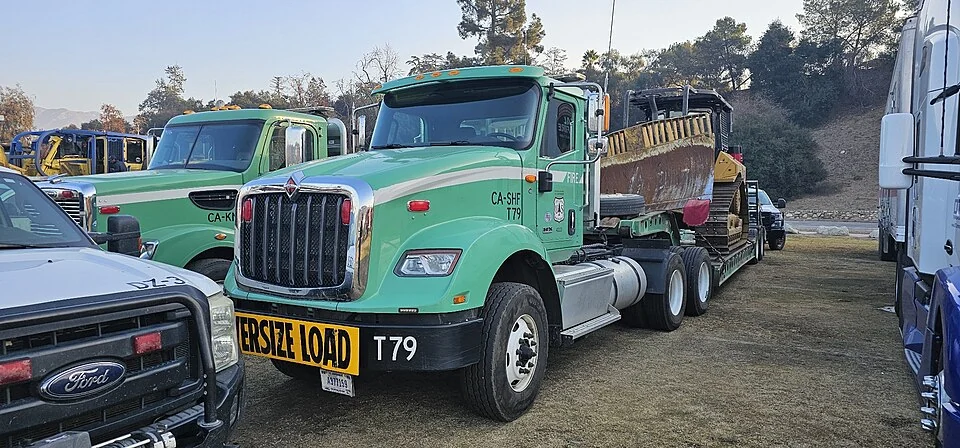
International HX Series equipment-transport tractor at the Eaton Fire command post in California, photographed in January 2025. Exact variant and model year not established.
2025 Southern California fires and the United States Forest Service (USFS) - Fire Equipment at Eaton Fire Command Post (54263456549).jpgPhoto: Tom Stokesberry / USDA Forest Service · Original photo ↗ · Public domainResized for display. The pictured configuration may differ from your vehicle.
HX520 and HX620 identify axle placement
International distinguishes the HX520 with a 120-inch BBC and set-forward front axle from the HX620 with a 119-inch BBC and set-back front axle. Both are listed as truck or tractor configurations. The current family offers S13 and Cummins X15 engine choices. The final three digits therefore carry useful chassis information; “HX” alone leaves an important part of the vehicle description unresolved before body or trailer equipment is considered.
Use the suffix to organize a body comparison
For a proposed dump truck, start the comparison sheet with HX520 or HX620, then add the body position and measured axle spacing. A one-inch difference in BBC is not a reliable description of the change in axle layout. The useful question is where the completed body and its load sit relative to the axles. Treat a switch between these models as a chassis-layout decision that requires a fresh weight-distribution drawing, even if engine ratings match.
What matters in a comparison
An HX comparison should describe the maximum working loads and site conditions, not just a preferred engine rating. Ask the body builder to confirm the chassis interface and PTO needs. When looking at used equipment, separate truck age from body age and check both histories. Add specialized equipment maintenance and non-driving work hours to the ownership discussion.
Questions to take to the supplier
- What body and application approval accompany the chassis?
- Which PTO and transmission specification is installed?
- Are truck and body service histories both documented?
HV
Severe-duty work platform
Source checkpoint:
HV is International’s other severe-duty model family alongside HX. International’s powertrain material includes HV applications for S13, while older vehicles may use a different system. A short listing needs the model year, engine and body configuration before it can support a useful comparison.
Scope North American model family; equipment and availability vary by model year and configuration.
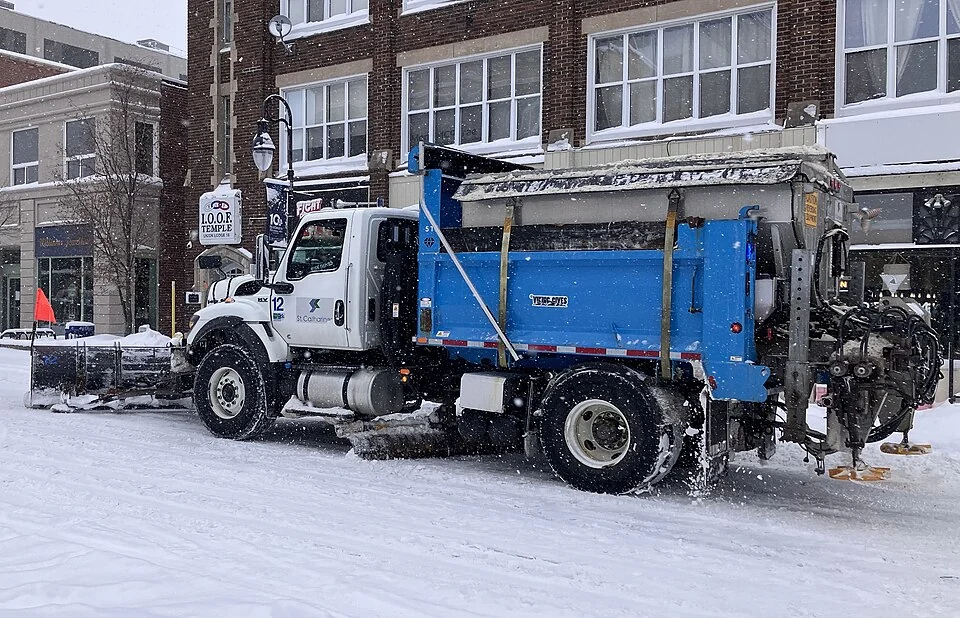
International HV Series snowplow truck in St. Catharines, Ontario, photographed in 2026. Model year not established.
International HV Series Snow Plow Truck.jpgPhoto: Gogerr · Original photo ↗ · CC BY-SA 4.0Resized for display. The pictured configuration may differ from your vehicle.
The HV model number narrows the engine family
The current HV catalogue separates 509/609 models, listing Cummins B6.7 and L9 engines, from 515/615 models with the S13 Integrated Powertrain. It also lists day, extended and crew cabs, plus both set-forward and set-back front-axle layouts. This is more informative than calling every HV an S13 truck. The complete model number should appear beside the engine on a comparison sheet, especially when older and current vehicles share one search result.
Make auxiliary equipment part of the identity
On a municipal fleet shortlist, two HVs may have similar cab photographs but different engine families and auxiliary equipment. Record the full model, cab seating arrangement and the body’s control system before comparing price. For a snowplow or utility application, the body controls and equipment package help explain what the vehicle was ordered to do. A familiar switch layout is not proof that a different body can use the same programming or power connection.
What matters in a comparison
For an HV work truck, start with the body supplier’s requirements for frame, wheelbase and power. Describe how much of the day is spent driving versus operating attached equipment. When comparing with HX, ask what specific workload requires either chassis rather than using a model hierarchy as a purchasing rule. Retain a clear record of included body equipment in the cost estimate.
Questions to take to the supplier
- Which chassis requirements come from the body builder?
- What stationary work does the engine support?
- Which configuration differences distinguish the competing quote?
MV
Medium-duty work truck
Source checkpoint:
International lists MV in its medium-duty range. It is distinct from the eMV electric model, which appears separately in the catalogue. An MV designation identifies the truck family, while the installed work body and the individual chassis rating determine the completed vehicle being compared.
Scope North American model family; equipment and availability vary by model year and configuration.
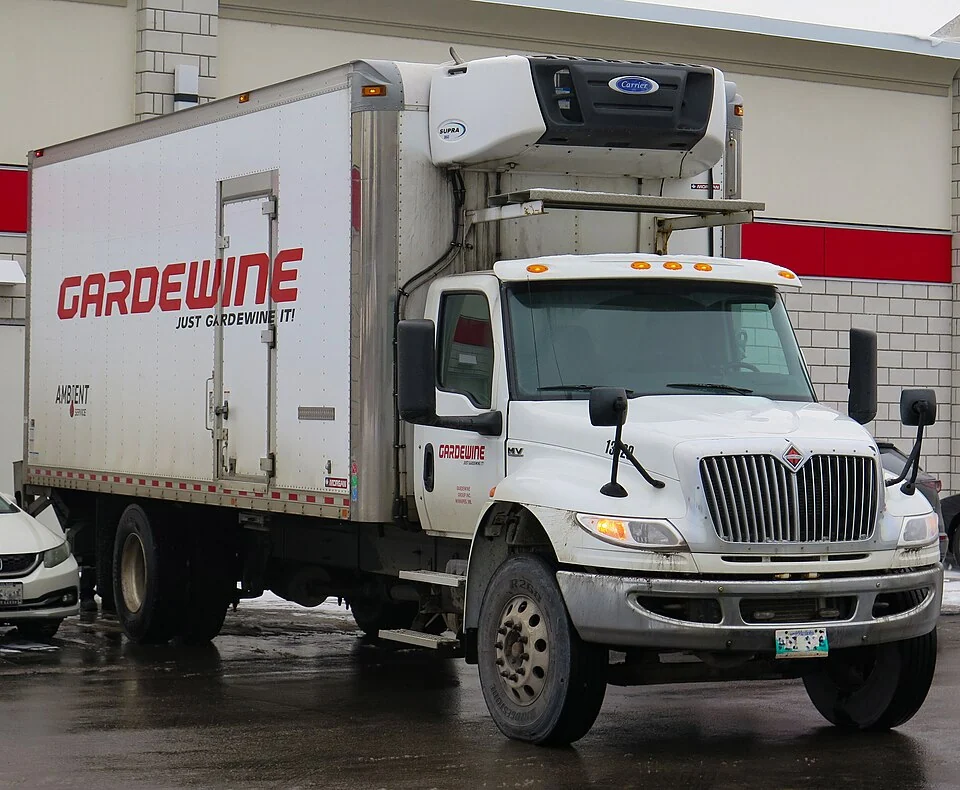
2019 International MV607 refrigerated box truck, photographed in Sault Ste. Marie, Ontario, in 2023.
2019 International MV607 Box Truck in White (Gardewine), Front Right, 01-25-2023.jpgPhoto: Elise240SX · Original photo ↗ · CC BY-SA 4.0Resized for display. The pictured configuration may differ from your vehicle.
MV607 and low-profile MV60H
International identifies the MV607 and low-profile MV60H separately, although both list a 107-inch BBC and 40-inch bumper-to-axle dimension. The family includes day, extended and crew cabs, with Cummins B6.7 and L9 engine choices. Low-profile is therefore a specific chassis distinction, not another name for every MV. Matching the cab’s front dimensions does not establish the same frame height, completed body height or loading arrangement.
A delivery body needs its own height comparison
For a delivery truck serving both loading docks and street-level stops, compare the completed floor height and the fitted loading equipment. A low-profile chassis may be relevant to that discussion, but the finished body and tyres also belong in the measurement. Put the MV model code beside the body dimensions rather than relying on a generic box-truck description. This makes it easier to spot two advertisements that have similar box lengths but different loading arrangements.
What matters in a comparison
For an MV delivery or service build, list body weight, tools, auxiliary equipment and expected cargo before estimating payload. Confirm electrical and mechanical integration with the upfitter. Compare complete vehicle costs, including a liftgate or other essential body equipment. If an electric eMV is also being considered, evaluate charging and energy costs separately from the diesel-fuel tools on this site.
Questions to take to the supplier
- Is the listing MV or eMV?
- What completed weight and cargo allowance are expected?
- Which body systems need chassis integration?