Mack trucks
Mack’s catalogue includes highway, regional, vocational and refuse equipment. Some familiar names also appear alongside successor or redesigned models, so the year and exact generation matter. This directory separates a model’s intended role from promises about fuel savings or reliability. Compare the body, powertrain and operating history of the specific truck; do not assume every vehicle with the same name carries the same equipment.
Compare the model families
| Model / family | Application | Overview | Model notes |
|---|---|---|---|
| Anthem | Regional and highway truck | Mack’s current Anthem is positioned for regional haul, with the manufacturer distinguishing its redesigned form from the previous Anthem. The shared name can therefore refer to materially different generations. Check the model year and powertrain before using a current brochure to assess a used example. | Read the profile → |
| Pinnacle | Conventional regional and vocational truck | Mack continues to include Pinnacle in its product directory under regional and vocational roles. Its catalogue also lists newer model names, so a Pinnacle reference should be tied to the actual truck and documentation rather than treated as a statement about current factory ordering availability. | In this guide |
| Granite | Vocational work truck | Granite is Mack’s vocational truck family. Mack’s catalogue distinguishes a redesigned Granite from a Legacy Granite, so the model name alone is not enough to identify the specification. Both a work-body configuration and the exact generation matter when comparing listings. | Read the profile → |
| LR | Low-entry refuse truck | Mack’s LR is a refuse-focused low-entry truck. It is distinct from the LR Electric model listed separately by Mack. The collection body, driving arrangement and route are integral to its specification; a refuse chassis should not be evaluated like a highway tractor. | In this guide |
Bring the exact specification.
The family name helps organize your search. The build sheet, serial number and relevant manufacturer documentation identify what is installed. Compare like-for-like applications and request evidence for cost or performance claims.
Manufacturer references support the model facts. Our examples and comparisons are editorial interpretation prepared with AI assistance, not road tests or an expert inspection.
Check the year, market and exact build before applying a specification. This guide does not authorize parts fitment, repairs, modifications or loading.
Mack manufacturer reference ↗Independent editorial resource. Brand names identify equipment; they do not imply a partnership or endorsement.
Pinnacle
Conventional regional and vocational truck
Source checkpoint:
Mack continues to include Pinnacle in its product directory under regional and vocational roles. Its catalogue also lists newer model names, so a Pinnacle reference should be tied to the actual truck and documentation rather than treated as a statement about current factory ordering availability.
Scope North American model family; equipment and availability vary by model year and configuration.
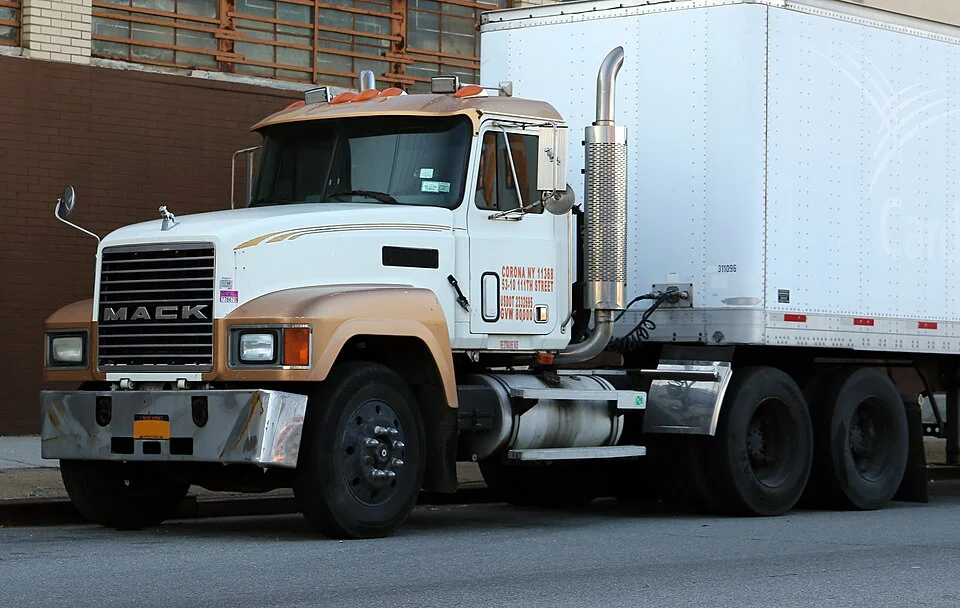
Mack CHU613 Pinnacle day-cab tractor, photographed in 2014. Representative set-forward-axle configuration; model year not established.
Mack CHU613 Pinnacle Day Cab tractor.jpgPhoto: Mr.choppers · Original photo ↗ · CC BY-SA 3.0Resized for display. The pictured configuration may differ from your vehicle.
Use the model code behind the Pinnacle name
Mack’s 2023 body-builder identification reference uses PI for Pinnacle. Earlier Mack body-builder material distinguishes CHU Pinnacle models with an axle-forward layout from CXU Pinnacle models with an axle-back layout. Those older codes are useful when reading used advertisements and historical drawings. They are not a statement that all of those variants remain available to order, nor that current Pinnacle information describes every truck previously sold under that name.
Resolve a mixed used-truck shortlist
If one seller gives a PI designation and another gives CXU, preserve both codes in the comparison rather than shortening both entries to Pinnacle. Use the corresponding dated documents to identify the cab and axle layout, then compare the installed powertrain. This avoids treating an older axle-back truck as the same chassis as an axle-forward example. A photograph can support identification, but the code and build record are stronger evidence than a polished grille or a shared badge.
What matters in a comparison
For a Pinnacle, focus the comparison on the installed drivetrain, axle arrangement and history of work. Ask about route and site use, and check whether the cab setup meets the operation’s nights-away requirements. When comparing against a newer Mack platform, keep age, condition and equipment differences explicit. Confirm parts and service support for the actual engine generation instead of extrapolating from the brand.
Questions to take to the supplier
- Which model-year specification supports this truck?
- How was it used: regional road work or vocational service?
- What records exist for the drivetrain and chassis?
Sources & limits
LR
Low-entry refuse truck
Source checkpoint:
Mack’s LR is a refuse-focused low-entry truck. It is distinct from the LR Electric model listed separately by Mack. The collection body, driving arrangement and route are integral to its specification; a refuse chassis should not be evaluated like a highway tractor.
Scope North American model family; equipment and availability vary by model year and configuration.
The driving station is part of the specification
Mack’s LR material describes seated and stand-up operating arrangements, left, right or dual steering positions, and standard, flip or bi-fold door designs. Mack’s June 2026 LR overview also identifies rear-loader and side-loader body applications. These choices mean that two low-entry LR trucks may have different operator workflows. The LR badge and collection-body type alone do not identify the fitted steering stations, entry doors or working position.
Compare a collection cycle on paper
For a side-loading route, make a simple sequence of arrival, container handling, departure and any required exit from the cab. Against each step, note which installed station and door the operator would use under the vehicle’s approved operating procedures. This is a way to compare layouts before selecting equipment; it is not driving instruction. It also reveals why a visually similar rear-loader specification may not answer the same staffing and access requirements.
What matters in a comparison
For an LR, walk through a complete collection cycle with the actual body layout in mind. Review access, operator positions and visibility around installed equipment. Use route stops and equipment hours alongside kilometres in a maintenance budget. If comparing a diesel LR with LR Electric, build separate energy and infrastructure models; a liquid-fuel calculator cannot establish electric charging cost.
Questions to take to the supplier
- Is the truck diesel LR or LR Electric?
- Which collection body and driving positions are fitted?
- What stop count and body-duty history are available?