Kenworth trucks
Start with the job before the badge. Kenworth’s range includes highway tractors, vocational chassis and medium-duty trucks. The profiles below separate those roles so a cab style or model number does not become a substitute for a complete specification. Compare axle layout, body requirements and the actual powertrain on the build sheet. A model-family page is a starting point for a vehicle-specific discussion.
Compare the model families
| Model / family | Application | Overview | Model notes |
|---|---|---|---|
| T680 | Highway tractor | The T680 is Kenworth’s aerodynamic highway-truck family. It belongs on a shortlist for freight work where road speed, cab configuration and the tractor–trailer combination shape the specification. It is a different starting point from the vocational T880 or traditional-style W990. | Read the profile → |
| T880 | Vocational chassis | Kenworth positions the T880 for vocational work. Its role includes carrying specialized bodies and doing work where the chassis specification matters as much as the cab. A T880 model name alone does not identify axle arrangement, frame, power take-off equipment or installed body capacity. | Read the profile → |
| W990 | Traditional-style heavy truck | The W990 is Kenworth’s long-hood, traditional-style truck family. It offers a distinct cab-and-hood layout from the aerodynamic T680. Use the model name to narrow the layout you want, then use the exact chassis and drivetrain specification to assess the work. | In this guide |
| T180 | Lighter medium-duty truck | The T180 sits at the lighter end of Kenworth’s medium-duty family. Kenworth groups it with the T280, while the T380 and T480 serve heavier configurations. It is a useful starting point for a smaller body-equipped work truck, rather than a highway-tractor comparison. | In this guide |
| T280 | Medium-duty distribution chassis | The T280 is part of Kenworth’s lighter medium-duty range alongside the T180. Its purpose is different from the heavy highway T680: the completed work body, urban access and the route’s loading pattern deserve early attention. Specify the exact rating rather than treating T280 as a payload figure. | In this guide |
| T380 | Heavier medium-duty chassis | Kenworth groups the T380 with the T480 in its heavier medium-duty range. The related T380V vocational-hood designation matters when reading a listing: Kenworth describes that variant for jobs requiring full parent frame rails and front-engine PTO provisions. Confirm the actual variant before comparing it. | In this guide |
| T480 | Heavy end of the medium-duty range | The T480 shares Kenworth’s heavier medium-duty platform grouping with the T380. Kenworth also lists a T480V vocational-hood version for specific frame and front-engine PTO requirements. These are specification distinctions to resolve before assuming that two similarly named trucks can carry the same body. | In this guide |
Bring the exact specification.
The family name helps organize your search. The build sheet, serial number and relevant manufacturer documentation identify what is installed. Compare like-for-like applications and request evidence for cost or performance claims.
Manufacturer references support the model facts. Our examples and comparisons are editorial interpretation prepared with AI assistance, not road tests or an expert inspection.
Check the year, market and exact build before applying a specification. This guide does not authorize parts fitment, repairs, modifications or loading.
Kenworth manufacturer reference ↗Independent editorial resource. Brand names identify equipment; they do not imply a partnership or endorsement.
W990
Traditional-style heavy truck
Source checkpoint:
The W990 is Kenworth’s long-hood, traditional-style truck family. It offers a distinct cab-and-hood layout from the aerodynamic T680. Use the model name to narrow the layout you want, then use the exact chassis and drivetrain specification to assess the work.
Scope North American model family; equipment and availability vary by model year and configuration.
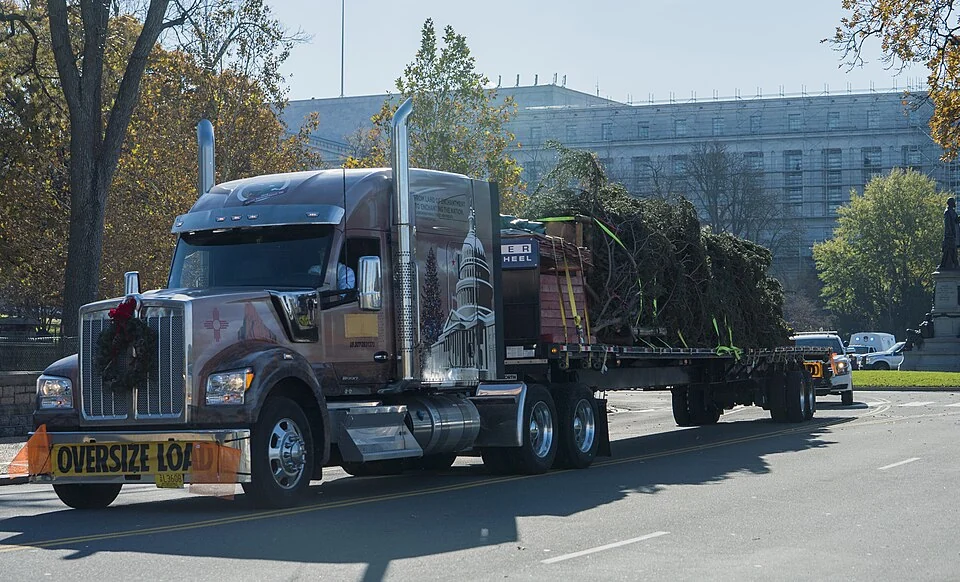
Kenworth W990 hauling the U.S. Capitol Christmas Tree in November 2019. Representative sleeper configuration; model year not established.
US Capitol Christmas Tree 2019 (20191125-FS-WashingtonDC-TEF-003).jpgPhoto: Tanya Flores / USDA Forest Service · Original photo ↗ · Public domainResized for display. The pictured configuration may differ from your vehicle.
Read the BBC dimension correctly
Kenworth introduced the W990 with a 131.5-inch bumper-to-back-of-cab dimension and day-cab, 40-inch flat-top, and 52- or 76-inch mid-roof sleeper configurations. BBC stops at the cab reference; it is not the overall length of a completed sleeper tractor. Keep the front-packaging (BBC) dimension, sleeper choice and wheelbase in separate columns when comparing advertised trucks. Otherwise the front dimension can be confused with the complete sleeper-cab length, or wheelbase with living space.
Check the trailer envelope, not just the cab
For an illustrative W990 comparison, take two trucks with the same sleeper but different wheelbases. Record the fifth-wheel location and the gap to the trailer for each; the sleeper label alone cannot explain how the combination fits a loading area. Add exhaust, cab accessories and the trailer’s front corners to the clearance drawing. Compare the combination in its intended operating arrangement, including articulation, rather than assuming the published BBC predicts turning clearance or total combination length.
What matters in a comparison
A visual preference can be legitimate, but keep it separate from measurable operating assumptions. On a W990 shortlist, compare overall length, access at loading locations, sleeper needs and the actual axle configuration. A premium interior or appearance package should be an explicit ownership cost. Do not assume the same engine badge means two trucks have identical ratings or gearing.
Questions to take to the supplier
- Will the complete combination fit routine loading locations?
- Which options explain the difference in asking price?
- Is the cab configuration appropriate for the nights away?
T180
Lighter medium-duty truck
Source checkpoint:
The T180 sits at the lighter end of Kenworth’s medium-duty family. Kenworth groups it with the T280, while the T380 and T480 serve heavier configurations. It is a useful starting point for a smaller body-equipped work truck, rather than a highway-tractor comparison.
Scope North American model family; equipment and availability vary by model year and configuration.
Recognize the newer medium-duty cab
The T180 belongs to Kenworth’s medium-duty range introduced in 2021, with a 2.1-metre cab. Kenworth described this cab as 8 inches wider than its predecessor and listed a three-person bench-seat arrangement as standard for the T180 at launch. Those details matter when moving from an older delivery truck: cab width and seating layout are distinct from cargo-box width. Photographs of the body alone cannot tell a buyer which cab workspace or seating arrangement is present.
Plan a delivery crew’s working space
For a T180 used by a driver and two helpers, sketch occupied seats separately from storage for scanners, paperwork and protective equipment. Compare the actual seat installation with the build record; a family-level standard specification is not evidence that a used cab remains unchanged. Keep equipment out of the seating and access space rather than counting an unused cushion as permanent storage. This makes a cab inspection for the crew useful even when two candidate trucks carry identical delivery boxes.
What matters in a comparison
Define the completed vehicle first: body, cargo, people and installed equipment all consume carrying capacity. A lower-rated chassis can suit a compact job, but it should not be chosen from the empty chassis description alone. Ask for a completed-vehicle weight calculation and compare access, body dimensions and service availability with the next size up.
Questions to take to the supplier
- What is the completed vehicle’s plated rating?
- How much payload remains after the body and equipment?
- Does the cab and body layout suit the route?
Sources & limits
T280
Medium-duty distribution chassis
Source checkpoint:
The T280 is part of Kenworth’s lighter medium-duty range alongside the T180. Its purpose is different from the heavy highway T680: the completed work body, urban access and the route’s loading pattern deserve early attention. Specify the exact rating rather than treating T280 as a payload figure.
Scope North American model family; equipment and availability vary by model year and configuration.
Choose the correct hood drawing
Kenworth’s 2021 medium-duty body-builder introduction distinguishes a 107.5-inch short aero hood from a 109.5-inch medium aero hood, measured bumper to back of cab. It associates the medium hood with higher-horsepower and all-wheel-drive applications. These are range-level configuration choices, not a claim that every T280 offers every combination. For a particular T280, identify the installed engine, hood and drive configuration before selecting the reference drawing; the model number alone is not the drawing number.
Avoid transferring a box-truck layout blindly
The two published hood dimensions differ by 2 inches. When comparing a replacement T280 for an existing delivery body, begin both sketches at the same bumper reference, then mark cab back, front axle and rear axle. Do not carry over a wheelbase recommendation solely because the box length matches. The cab-to-body gap, rear overhang and component locations need their own checks. This prevents a seemingly minor front-end difference from disappearing inside an otherwise identical body quotation.
What matters in a comparison
For a delivery or service operation, list every permanent item carried before estimating revenue payload. Compare the chosen T280 with a T380 on the same body and annual workload. A larger chassis may offer useful headroom, but extra purchase cost is only justified by an actual requirement. Keep liftgate, refrigeration and other body-system costs separate so they are not omitted from the operating budget.
Questions to take to the supplier
- What weight does the installed body add?
- Are auxiliary body loads included in the power specification?
- Where does the loaded vehicle approach its limits?
T380
Heavier medium-duty chassis
Source checkpoint:
Kenworth groups the T380 with the T480 in its heavier medium-duty range. The related T380V vocational-hood designation matters when reading a listing: Kenworth describes that variant for jobs requiring full parent frame rails and front-engine PTO provisions. Confirm the actual variant before comparing it.
Scope North American model family; equipment and availability vary by model year and configuration.
A T380 truck and tractor are different starting points
Kenworth lists the Class 7 T380 as either a straight truck or tractor, with published gross vehicle weight up to 33,000 lb. The model name therefore does not tell you whether the chassis was specified to carry a body or pull a semitrailer. Identify the actual configuration first. In a straight-truck comparison, body mounting and rear overhang are central; in a tractor comparison, the fifth-wheel installation and the complete trailer combination also enter the assessment.
Keep truck weight separate from combination weight
Illustrative scale example: a truck’s axles total 30,000 lb and the attached trailer’s axles total 16,000 lb, giving 46,000 lb for the combination. These readings describe different quantities; comparing only the combined number with the truck’s published GVW mixes them up. Nor does the lower truck reading approve the combination. Check the individual vehicle and axle ratings, the applicable combined rating, coupling limits and operating requirements before drawing a capacity conclusion for any actual T380.
What matters in a comparison
Start a T380 discussion with body length, frame requirements and axle loading. If the job calls for front-mounted equipment, ask the body builder to identify the required hood and chassis arrangement explicitly. A seller’s short description can omit a meaningful suffix. Compare total completed weight and available cargo space, then budget the supporting body equipment as well as the truck.
Questions to take to the supplier
- Is it a T380 or T380V configuration?
- Does the body need full parent rails or front-engine PTO?
- Which axle and suspension ratings apply?
T480
Heavy end of the medium-duty range
Source checkpoint:
The T480 shares Kenworth’s heavier medium-duty platform grouping with the T380. Kenworth also lists a T480V vocational-hood version for specific frame and front-engine PTO requirements. These are specification distinctions to resolve before assuming that two similarly named trucks can carry the same body.
Scope North American model family; equipment and availability vary by model year and configuration.
The largest published numbers need not belong together
Kenworth publishes T480 configurations up to 66,000 lb GVW. Separately, its 2021 TX-8 launch specifies a maximum 57,000 lb GCWR for that transmission with the PX-7 or PX-9. GVW and GCWR are different measures, and these separate publications must not be combined into an imaginary maximum-capacity truck. The practical lesson is to identify the complete T480 powertrain and rating set, not assume the family’s largest chassis figure applies with whichever transmission appears in a listing.
Build a compatibility row before pricing a T480
For a proposed tandem-axle T480, place the vehicle rating, engine torque rating, exact transmission, combined rating and rear-axle ratings on one line. Mark figures taken from a brochure separately from those confirmed for the actual build. A blank or conflicting transmission limit is a design issue to resolve before comparing prices or body quotations. This exercise is especially useful when an advertisement combines a model-family capacity headline with a generic “automatic” description and no chassis specification.
What matters in a comparison
When comparing a T480 with a heavier vocational chassis, use the proposed body and daily workload as the common basis. Record axle configuration, loaded distribution and equipment duty hours. Extra rated capacity is not the same as extra legal payload on a particular route. Have the completed combination checked for its application, and use an operating budget that includes the body’s maintenance.
Questions to take to the supplier
- Does the listing include the V vocational variant?
- What completed-vehicle weight was calculated?
- Is the drivetrain approved for the intended work?